By Tom Goettl and Peter Toninato
In today’s tight labor market, retaining great people isn’t a goal—it’s critical to your team and company’s success. Especially in engineering, manufacturing, and architecture, where technical talent is in high demand and short supply, the ability to keep your team intact can mean the difference between hitting project deadlines and watching work stall out. Retaining your employees adds customer value, strengthens your internal culture, and is the foundation that propels your companys growth.
“So, what makes an employee stay? Why do others leave? And most importantly, what can you do about it?"
At Konik, we spend every day talking with professionals in the architecture, engineering and manufacturing industries. We hear directly from the candidates who’re very happy in their current roles and are not in the job market. So, what makes an employee stay? Why do others leave? And most importantly, what can you do about it?
Here’s what we’re seeing—and what you can do to build staying power into your workforce.
Why Employees Leave: Even When They Seem Happy
Let’s start with some recent data. According to a recent Gallup study, more than half of the employees surveyed say they’re actively or passively looking for a new job. The reasons may surprise you:
- Lack of growth opportunities: Technical professionals want to keep learning and advancing. They’re thinkers, creators, and inventors. Their minds need to be challenged in new ways on a regular basis. When there’s no clear mental challenge ahead, they start looking sideways.
- Feeling underappreciated: Recognition doesn’t have to be a big event. But it does need to be consistent and authentic. A simple “Thank you” or a shout-out in a staff meeting or team message board like Teams or Slack will go a long way.
- Poor communication or leadership disconnect: In project-driven environments, unclear expectations or lack of feedback can quickly erode trust and engagement. Employees need to understand what’s expected of them in detailed, clear terms. If expectations are vague, they feel disconnected from the team and company.
- Compensation misalignment: This isn’t just about salary—though that matters—so ensure your compensation is competitive. It’s also about benefits, flexibility, and total work-life value. Business has changed rapidly over the past few years, and employee expectations have as well.
We’ve had countless conversations with candidates who aren’t unhappy—they’re just uninspired. And that’s an opportunity to identify and support cultural improvements.
At Konik, we compiled our own finding through candiddate interviews and a recent LinkedIn Survey by our Account Executive, Peter Toninato, to learn candidates primary job search motivations. Here are our findings:
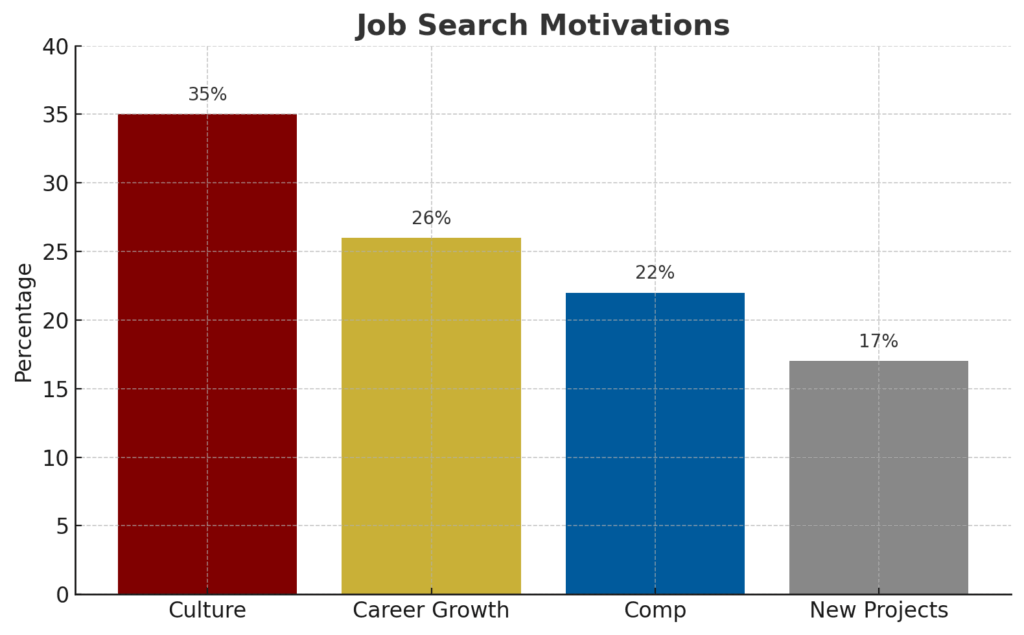
Peter Toninato reflected on the survey and data compilation and offered his assessment:
“If the exercise has taught me anything, it has demonstrated how no one thing makes someone happy or disgruntled; it remains of the highest importance as a leader to get to know each individual and what they value, then work towards making them feel valued. That is how you retain talent.”
Why Employees Stay (And How to Build on That)
Thankfully, we’ve seen what works. The best team leaders aren’t lucky—they’re intentional about culture, communication, and connection.
- Investing in growth: Coaching, certifications, and cross-training boost capabilities and show your team you’re invested in their future. Giving a Mechanical Engineer a software programming assignment will feed their intellectual appetite for months. Giving your key players access to leadership training gives concrete feedback that you’re vested in their future.
- Creating meaningful connections: People stay where they feel seen and supported. Simple efforts like regular one-on-ones, team check-ins, and mentorships go a long way. Quarterly reviews focused on helping them succeed with accountability, mentorship, and progress go a long way to keep all employees engaged.
- Recognizing wins—big and small: From a quick shout-out at the morning meeting to sharing kudos on LinkedIn, recognition reinforces value. Support their wins while helping them through stumbles, create authentic loyalty, and strong relationships.
- Offering flexibility: Whether it’s hybrid schedules when possible, compressed workweeks, or better PTO policies, the best companies listen and adapt. Get creative with PTO, flexible start times, and ½ days from home, or summer hour schedules.
You don’t have to do everything. But making incremental improvements to overall employee benefits and perks offerings will go a long way for your team’s culture.
Make Retention a Daily Habit
Retention isn’t solved with one big policy change or an annual engagement survey. It’s built daily through intentional leadership and genuine care for your people. Small incremental improvements will go a long way with your employees.
Here are three simple steps to get started:
- Ask your team what matters most. Don’t assume. Send a short survey or ask in one-on-ones. Better yet, review The Stay Interview for a deeper understanding.
- Identify your top three “stay factors.” What makes your workplace special? Ask your employees what makes your company and team unique. Double down and make improvements on what really matters to them.
- Watch for warning signs. A dip in performance, meeting silence, or a demeanor change often signals deeper disengagement. Lean into gaining open feedback.
The Bottom Line
In engineering, manufacturing, and architecture, you’re only as strong as your people. At Konik, we’re proud to support companies who are committed not just to hiring brilliant talent—but to keeping them, growing them, and building workplaces where people want to stay.
Need help identifying why your team might be slipping—or how to attract and retain a loyal technical team? Let’s talk. Schedule a time to chat with Peter Toninato, Account Executive, at peter@koniknetwork.com.
We have the insight, network, and passion to help you build the team you’ve always wanted.